AROUND THE WORLD ESSAY REMODELING-AROUND-THE-WORLD
How Homes Are Renovated in Germany: Renters Bring Their Kitchen, Solid Masonry and Strict Trades
How Germans really renovate: tenants who take their own kitchen, courts that limit repainting clauses, licensed trades, and what a bathroom costs. Ideas to borrow.
In 2025, Germany recorded about 3,200 residential buildings demolished. Against a stock of roughly 19.8 million, that works out to one building in about 6,100. Germans don't tear houses down and start over; they keep refitting what's there. That single habit explains most of what's different about how a German home gets renovated: old masonry shells, strict rules about who may touch the pipes, and a rental culture where the tenant is as much a renovator as the landlord.
The numbers come from the national building-stock report published by dena, the German energy agency. Nearly 60% of residential buildings were built before 1979, and in a typical year only around 59,000 new ones are completed. The country is mostly renovating, not building.

Who owns, who rents, and why the kitchen leaves with the tenant
Roughly half of Germans rent. A Deutsche Welle explainer, citing 2015 figures, put the national share at about 48% and Berlin as high as 85%. (That's a 2017 article, so treat the exact numbers as a snapshot.) The same piece describes the part that surprises Americans: renters are often expected to supply their own kitchen appliances, even the kitchen counter, and to paint the place.
That only works because of a rule in the civil code. Under § 539 BGB, a tenant may take away any fixture they installed in the rental. A kitchen the tenant bought and fitted is theirs, and when they move, it moves with them.
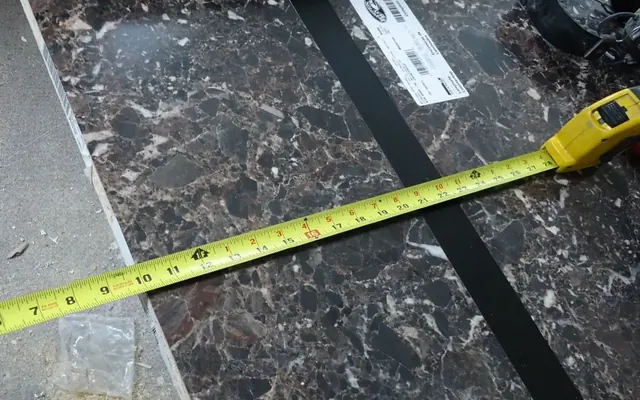
For a US homeowner, the practical lesson is to treat the kitchen as its own purchase, separate from the building. Measuring that purchase is a skill we cover in how to measure countertops in square feet, and the countertop calculator handles the same arithmetic.
Painting: the rule that surprises everyone
By default, the civil code puts "cosmetic repairs" (painting, wallpaper, interior doors and radiators) on the landlord. Most leases shift that to the tenant, and then the courts step in. The Berliner Mieterverein's info sheet lists what the Federal Court of Justice (BGH) has thrown out:
- A tenant who moved into an unrenovated apartment never has to renovate, during the lease or at move-out (BGH, March 2015), unless the landlord paid fair compensation up front.
- Fixed schedules ("kitchen and bath every three years, other rooms every five") are void. Wording like "as a rule" survives.
- Clauses forcing a specific color are void, and so is "return it painted white."
- Mandatory repainting at move-out regardless of how long you lived there is void.
- If the tenant is bound to do the work, they may do it themselves. The landlord can only demand a workmanlike job of "average quality," not a painting firm.
There's a catch that keeps tenants honest. If you move out leaving loud, saturated colors in a unit you took neutral, the BGH has held you can owe damages because a new tenant would have to repaint. And when a clause is void, the landlord falls back on the statute, and where the apartment has seriously deteriorated since move-in, a tenant can ask for a refresh, but the BGH's usual expectation is that the tenant pays about half (2020).
The upshot: in Germany, repainting a rental is a legal question as much as a chore, and a tenant's duty depends on the lease wording and the condition at move-in.
Who is allowed to do the work
Germany regulates trades much harder than the US does. Anlage A of the Handwerksordnung lists 53 crafts that can only be run as a business by someone with a master's qualification or an equivalent. The list reads like a renovation checklist: masons, painters, plumbers and heating installers, electricians, tilers, screed layers, parquet layers, joiners, plasterers.
The Economics Ministry's reasoning is that these are the crafts where bad work can endanger health or life. A business can also hire a master as its technical manager without the owner holding the title, so it isn't that every tradesperson has a Meisterbrief. It is that every licensed firm has a qualified person standing behind the work.

For homeowners the effect is mostly invisible until you get a quote. A German bathroom renovation involves a planner, plasterer, tiler, painter, electrician, and, according to the industry body VDS, the plumber (Installateur) in the lead. That coordination is built into the price.
What a bathroom costs, and why people are shocked
The VDS-backed survey of bath-and-heating firms, quoted by a German installer, prices a complete renovation of an average bathroom at about 7 to 8 square meters like this:
| Level | Complete renovation |
|---|---|
| Basic | about €28,400 |
| Mid-range | about €34,350 |
| Comfort | about €45,850 |
Those totals include new pipework plus electrical, plastering and tiling, and the survey says a typical job takes about 15 working days. It's an industry survey of member firms, not a statistical average, and prices have been rising. A 2017 forsa poll cited on the same page found consumers thought a bathroom needed about €9,200. The gap between what people expect and what a full job costs is the same mismatch US homeowners hit; see our bathroom remodel cost breakdown for the American version.

The shell: brick, concrete and a slow move to timber
Brick is still the biggest single wall material in new German housing. Of the roughly 59,000 residential buildings completed in 2025, 29% were brick and 24% were timber, and timber is the rising share, according to the dena building-materials chapter. Timber share varies widely: from 10% of permits in Bremen to 39% in Baden-Württemberg.
I couldn't find a reliable national number for how often interior walls are drywall rather than masonry, so I won't guess. What the stock figures do show is the age: older buildings are the norm. Heating is moving too: heat pumps went into 74% of the residential buildings completed in 2025.
Ideas worth borrowing
1. Price the kitchen as its own project. Germans separate the kitchen from the building. Doing the same in a US budget (cabinets, countertop, appliances, install as one line) makes it easier to compare quotes. The renovation budget calculator is a good place to give it a line of its own.
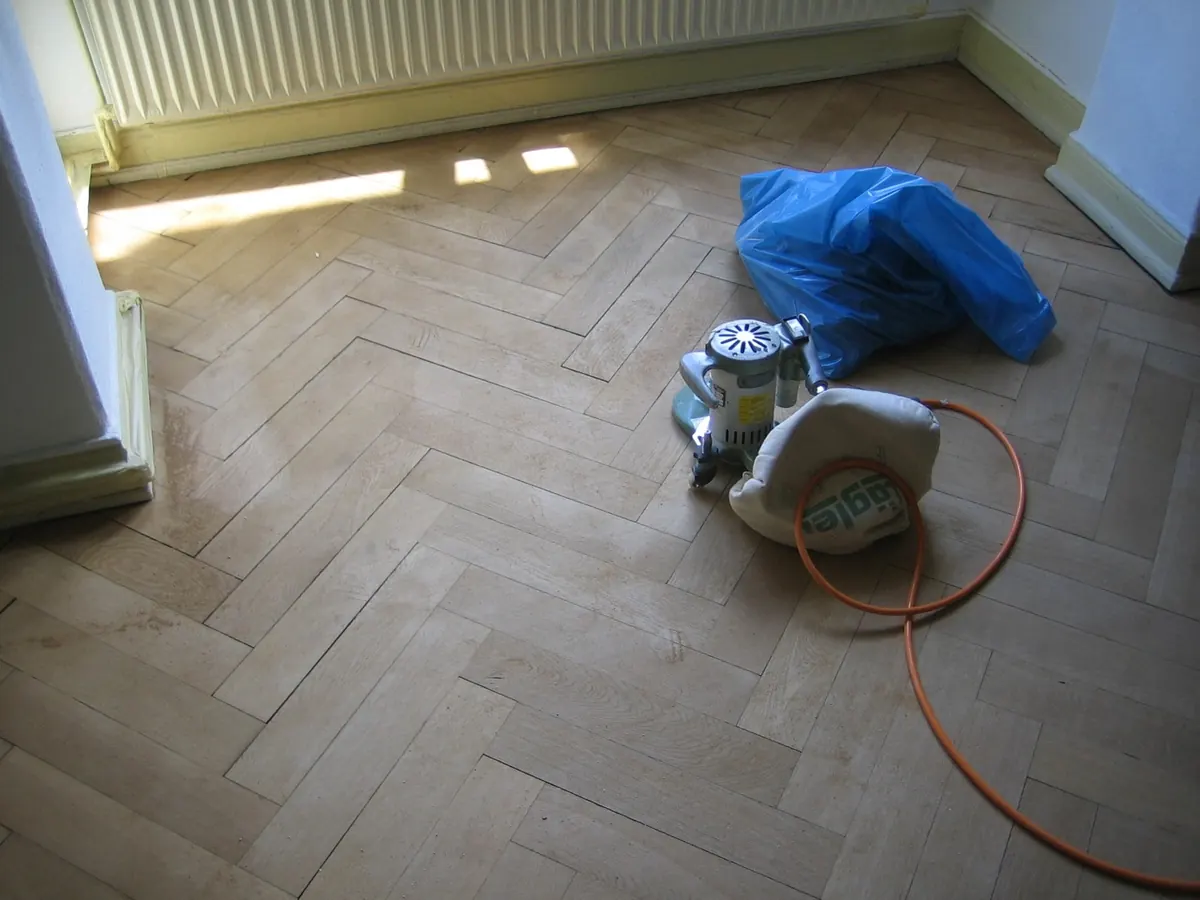
2. Refinish before you replace. The photo above shows the first sanding pass on a parquet floor. If the wood is solid, sanding and resealing is the cheaper first move. In a US house, solid hardwood can often be refinished more than once, which usually costs less than new flooring. Measure the room first using how to measure a room for flooring.
3. Pay by bank transfer against an itemized invoice. German law gives a tax credit on craftsmen's labor: 20% of labor costs, up to €1,200 a year, but only if you hold an invoice and pay into the contractor's account (§ 35a EStG). Material doesn't count. You can't claim that in the US, but the habit behind it is worth copying: get labor and materials listed separately, and pay in a way that leaves a record. It's the clearest way to see where a quote's money goes.
4. Hand over a neutral room. The BGH's logic about loud colors applies to any US seller. Before you list the house, repaint the bright accent walls back to something quiet. Buyers picture their own furniture against a calm wall more easily than against a loud one. The paint calculator will tell you how much that takes.
5. Appoint one lead trade for a bathroom. In a German bath the plumber coordinates everyone else. A US general contractor does that job, but if you're managing it yourself, pick one trade as the point person before demolition so the tiler isn't waiting on an electrician who hasn't been called.
What this means in practice
If you take only one thing from Germany, take this: the building is treated as permanent and the finishes as temporary. The wall stays, the floor gets sanded, the kitchen moves. That keeps renovation costs in the labor column, where they stay predictable, and out of the "surprise" column that sinks so many US budgets.
Germany sits alongside two other countries in this series. Japan goes the other way, with houses that are typically demolished after about 30 years, while South Korea renovates inside apartment blocks under building-management rules.
Sources
- dena Gebäudereport 2026 · Chapter 1: Building stock and construction activity
- dena Gebäudereport 2026 · Chapter 2: Building materials
- Deutsche Welle · 10 things you need to know about German apartments
- Berliner Mieterverein · Schönheitsreparaturen (info sheet)
- Gesetze im Internet · BGB § 539 (tenant's right to remove fixtures)
- Gesetze im Internet · Handwerksordnung, Anlage A (licensed trades)
- Federal Ministry for Economic Affairs · Regelungen der Handwerksordnung
- Rieth · Badsanierung Kosten (cites the VDS / bad&heizung survey)
- Gesetze im Internet · EStG § 35a (tax credit for craftsmen's labor)
Estimates and rules of thumb in these guides are for planning. Always confirm product coverage, local codes and supplier figures before you buy.
Image credits
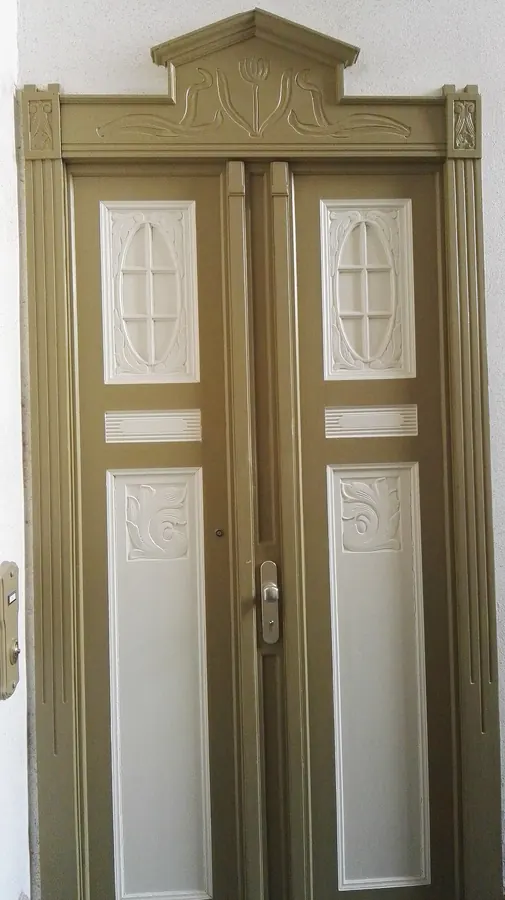
- A tall double door with panelled leaves and a carved pediment in a Berlin Altbau apartment. Photo: Z thomas, via Wikimedia Commons, CC BY-SA 3.0
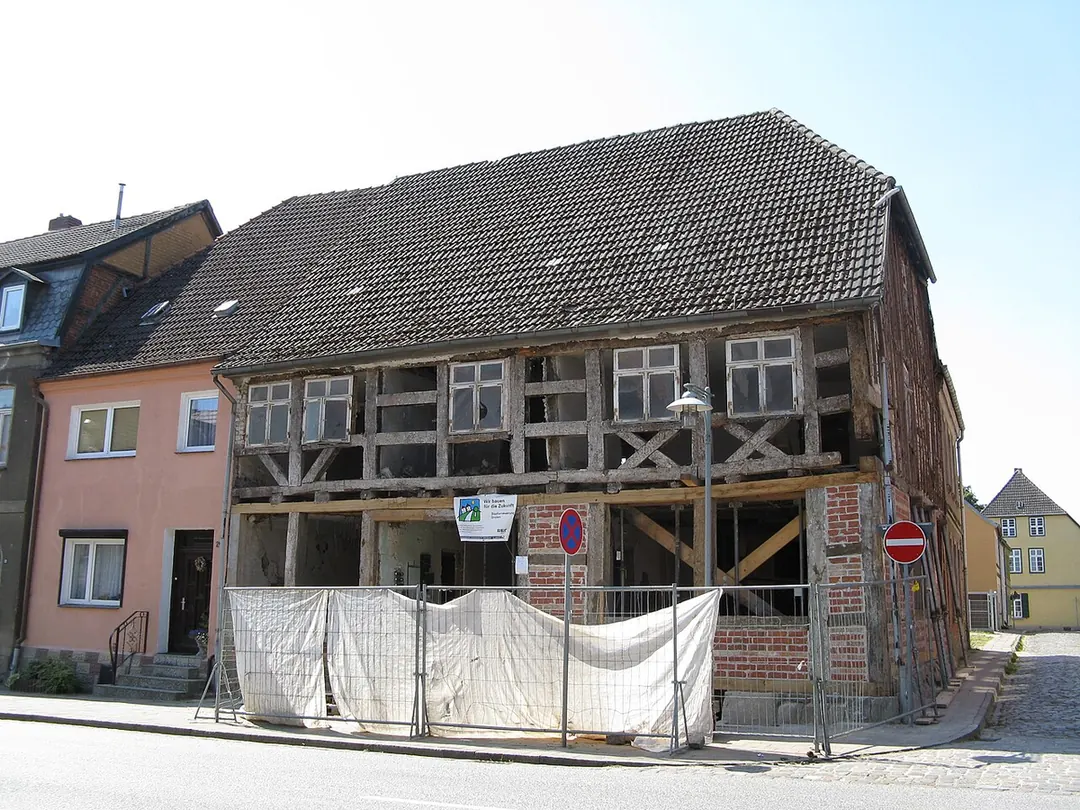
- An old half-timbered house in Gnoien in northern Germany, with its frame exposed and screening along the street during renovation. Photo: Niteshift, via Wikimedia Commons, CC BY-SA 3.0
- A floor sander at rest on a herringbone parquet floor in an empty room, mid-renovation. Photo: Niels Heidenreich, via Wikimedia Commons, CC BY 2.0
Photos are resized and converted to WebP for this site; no other changes. Each remains under its original licence.
Related guides
Around the World · Essay
How Homes Are Renovated in Japan: Tatami, Unit Baths, 30-Year Houses and Renovation Rules
How Japanese homes are really renovated: short-lived wooden houses, tatami room sizes, prefab unit baths, condo rules on what owners can change, and ideas to borrow.

Around the World · Essay
How Homes Are Renovated in South Korea: Ondol Floors, Apartment Rules and Wallpaper Everywhere
How South Korean apartments are really renovated: ondol heated floors, management-office consent, who does the work, what a full remodel costs, and ideas to borrow.
Kitchen & Bath · Guide
How to Measure Countertops in Square Feet (L-Shapes, Islands and Backsplash)
How to measure countertops in square feet: length × depth in inches ÷ 144 per section, the L-shape corner trap, islands with seating, and a 4 in backsplash, with a worked example.