FLOORING & TILE GUIDE
How Much Grout Do I Need? Joint Width, Tile Size and Bags
Grout use depends on joint width and tile size far more than floor area. Worked pound counts for mosaic, subway and large tile, plus when a 25 lb bag is too much.
The usual grout mistake isn't buying too little for the floor. It's looking at square footage alone. A 40 square foot bathroom floor in 12-inch tile takes under three pounds of grout. The same 40 square feet in 2-inch mosaic takes about eleven. Same room, four times the powder, and the only thing that changed was how many joints the tile makes.
What actually sets the amount
Grout fills a trench: the joint is as wide as your spacer, as deep as the tile is thick, and as long as every edge in the room added together. Three inputs move that volume.
Tile size. Small tile means more joint length per square foot. A grid of 12 by 12 tile runs about 2 feet of joint per square foot of floor. A grid of 2 by 2 mosaic runs 12 feet.
Joint width. Volume scales with width, so going from 1/8 inch to 1/4 inch doubles what you use. TEC's coverage chart for its sanded grout shows exactly that: 12 by 12 by 3/8 inch tile covers 14.58 square feet per pound at a 1/8 inch joint and 7.29 at 1/4 inch.
Tile thickness. Thicker tile makes a deeper joint. The same chart assumes the joint is filled to the full tile thickness. Real joints often aren't, since the data sheet asks for joints at least two-thirds of the tile's thickness deep, with high ridges of mortar raked out first. If your thinset squeezed up into the joints, you'll use less grout, and the tile will be harder to clean.

Coverage per pound, from a real data sheet
The easiest way to estimate is to take a manufacturer's chart and divide. These are TEC's figures for sanded cement grout, in square feet covered per pound. Charts from other brands differ slightly, so treat them as a good guide and check the bag you buy.
| Tile (length × width × thickness) | 1/8" joint | 1/4" joint |
|---|---|---|
| 2 × 2 × 1/4" mosaic | 3.64 | not listed |
| 3 × 6 × 1/4" subway | 7.29 | 3.64 |
| 4¼ × 4¼ × 1/4" | 7.74 | 3.87 |
| 6 × 6 × 1/4" | 10.93 | 5.46 |
| 12 × 12 × 3/8" | 14.58 | 7.29 |
| 12 × 24 × 3/8" | 19.42 | 9.72 |
| 24 × 24 × 3/8" | 29.15 | 14.58 |
The formula is area divided by the number in the table. That gives pounds.
Four worked examples
Small bathroom floor. 5 by 8 feet is 40 square feet. In 12 by 12 tile at a 1/8 inch joint: 40 ÷ 14.58 = 2.7 pounds. In a 2 by 2 mosaic: 40 ÷ 3.64 = 11 pounds. If you're tiling a bathroom floor in mosaic, the grout is a bigger line item than you'd guess.
Kitchen backsplash. 30 square feet of 3 by 6 subway at 1/8 inch is 30 ÷ 7.29 = 4.1 pounds. A wall that size looks like it needs a lot more, and then you mix a batch the size of a loaf of bread and it all gets used.
Living room in 12 by 24 tile. 120 square feet at 1/8 inch is 120 ÷ 19.42 = 6.2 pounds. At 1/4 inch it's 12.3. If you're using wide joints for a rustic look, double what you'd planned.
Shower with 6 by 6 tile. A shower enclosure with 100 square feet of wall and floor in 6 by 6 at 1/8 inch comes to 100 ÷ 10.93 = 9.1 pounds.
You can run your own numbers with the grout calculator and the tile calculator, which also works out how many boxes of tile to order.
Add a margin, then round to the bag
Add 10 to 15 percent for the grout that ends up in the bucket, on the sponge, and in the corners where the lip of your float doesn't reach. I'd go to 15 percent on a first-time job or on irregular tile like handmade or tumbled stone, where joints wander.
Then think about bag size. TEC sells this grout in 50 pound bags, 25 pound bags and 1 pound pails. A bag that large for a 4 pound backsplash is a waste of money and storage, so for jobs under about 10 pounds look for the smaller pails and bags, not the big sack. When you need a lot, buy it in one go so the color stays the same. TEC's data sheet specifically notes that with multiple bags from different lots you should dry-blend them before mixing, because pigment settles during shipping and color can vary.

Sanded or unsanded
Joint width also decides which type to buy. Fine Homebuilding puts the dividing line at 1/8 inch: unsanded for joints narrower than that, sanded for anything wider, because the sand resists shrinkage cracks in wider joints. The reverse causes trouble. Sanded grout pushed into very tight joints is hard to pack and tends to leave pinholes. TEC's own sanded product is rated for joints from 1/8 to 1/2 inch.
Polished marble and similar soft stone are the exception. Fine Homebuilding notes sanded grout may scratch highly polished stone, and TEC's data sheet says the same about polished marble, polished porcelain, glass and metal. Test a small spot if you're not sure.
Where grout doesn't go
Perimeter joints at walls, the tile-to-tub joint and changes of plane need flexible caulk, not grout. TEC says expansion joints must be kept through the tile wherever they exist in the backing, and that perimeter joints are required in all installations. A rigid grout line in a corner cracks as the house settles, and that's the crack people blame on "bad grout." Leave a small gap at the wall and budget for a tube of matching caulk.
Mix small, work small
Cement grout has a working life of about one to two hours after mixing (TEC says 1 to 2 hours after a 10-minute slake). In practice you want to work 5 to 10 square feet at a time, wipe, and move on. Mixing half the bag because you think you've got a big job means the last third goes stiff in the bucket. For a bathroom floor, three small batches beat one big one, and you won't be racing the clock on the last corner.
Keep the receipt and the lot number from the bag. If a joint cracks in a year, you can ask for the same color and lot instead of guessing from a swatch.
Sources
- TEC · AccuColor Premium Sanded Grout data sheet (coverage per pound)
- Fine Homebuilding · Sanded vs. unsanded grout
Estimates and rules of thumb in these guides are for planning. Always confirm product coverage, local codes and supplier figures before you buy.
Image credits
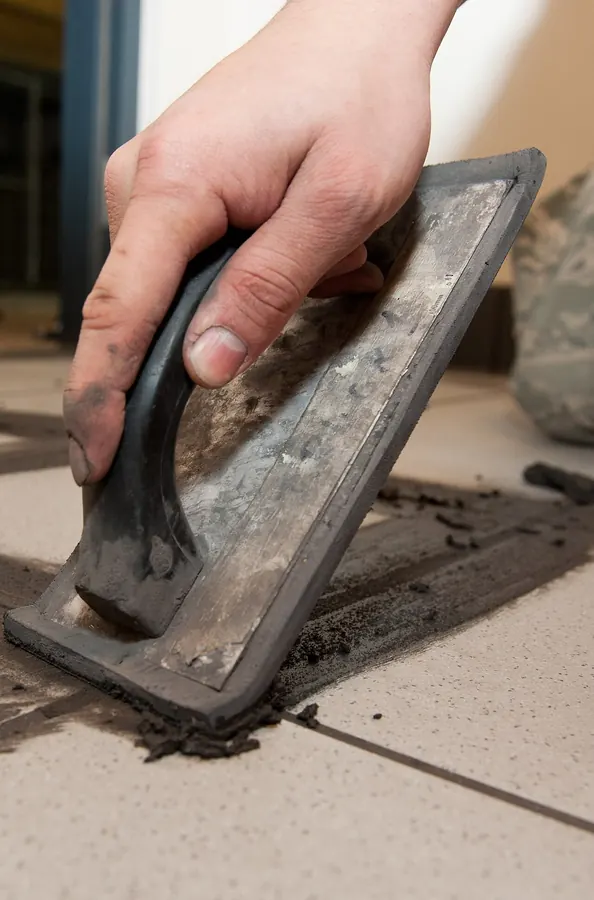
- A bare hand pressing a hard rubber grout float across cement grout between large floor tiles. Photo: Wikimedia Commons contributor (own work), via Wikimedia Commons, Public domain
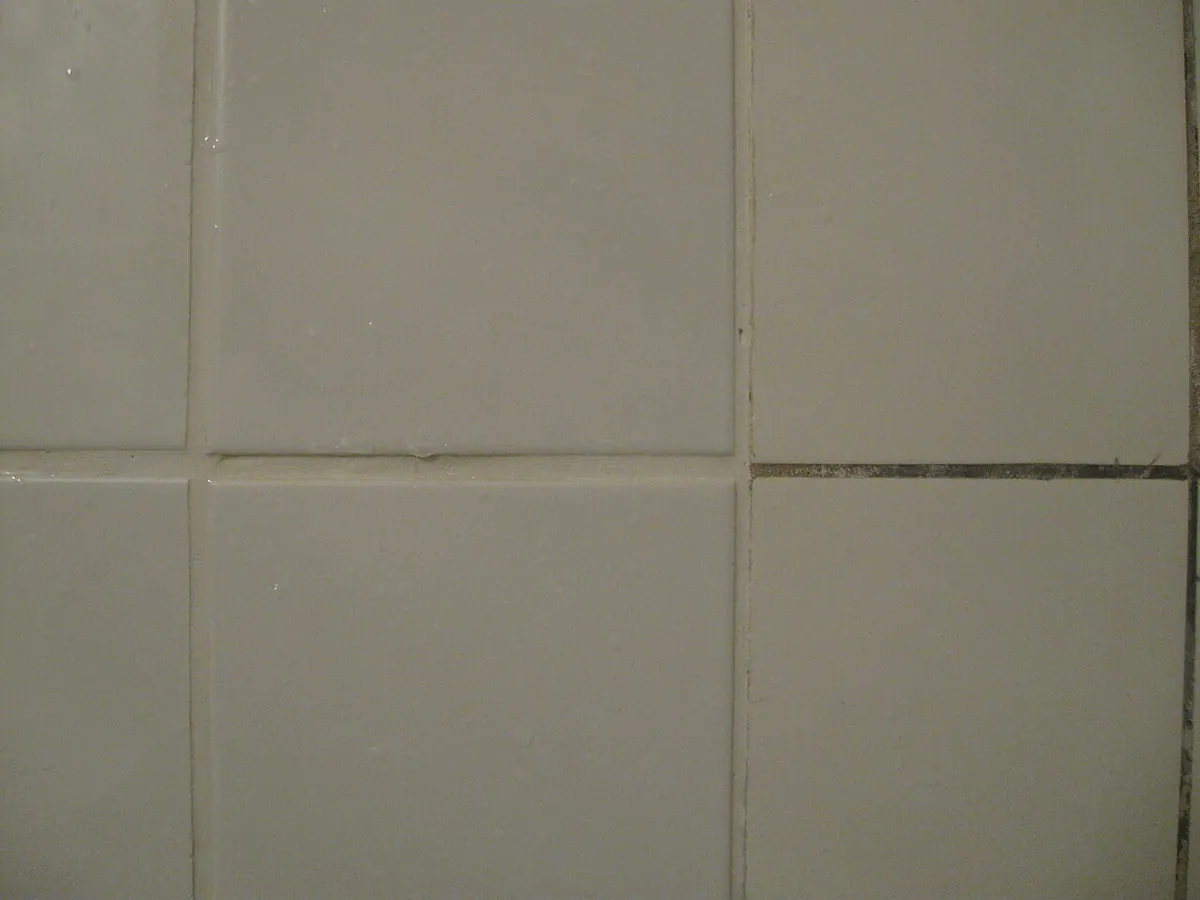
- Two tile joints side by side, one filled with light grout and one with dark grout. Photo: Juan de Vojníkov, via Wikimedia Commons, CC BY-SA 3.0
Photos are resized and converted to WebP for this site; no other changes. Each remains under its original licence.
Related guides
Flooring & Tile · Comparison
Sanded vs Unsanded Grout: Which One for Your Joint Width
Sanded vs unsanded grout comes down to joint width: unsanded for joints up to 1/8 inch, sanded from 1/8 inch up. Plus the tiles sand scratches and worked bag counts.
Flooring & Tile · Guide
How Many Tiles Do I Need? Measuring Floors, Walls and Backsplashes
Work out how many tiles to order: measure floors, walls and backsplashes, subtract only the big openings, add 10 to 20 percent waste, and keep spares for repairs.
Flooring & Tile · Guide
Flooring Waste Factor: Straight, Diagonal and Herringbone Layouts
How much extra flooring to buy for straight, diagonal, herringbone and chevron layouts. Waste percentages, why they differ, a worked 400 sq ft comparison, and when to add more.