FLOORING & TILE GUIDE
How Many Tiles Do I Need? Measuring Floors, Walls and Backsplashes
Work out how many tiles to order: measure floors, walls and backsplashes, subtract only the big openings, add 10 to 20 percent waste, and keep spares for repairs.
Most tile orders go wrong in the same quiet way: someone multiplies length by width, adds a round 10 percent, and orders. Then the installer starts in the doorway, the pattern is on a diagonal, and the last two boxes arrive from a different dye lot that doesn't quite match. The math is easy. The judgment calls around it are where the money goes.
Here is how to get from a tape measure to a number you can order with, for floors, walls and backsplashes.
Start with square feet, surface by surface
Measure each surface separately and write the numbers down with the room name. A 10 ft by 12 ft bathroom floor is 120 sq ft. The wall behind a tub that is 5 ft wide and 7 ft tall is 35 sq ft. Don't try to add up the whole bathroom in one go; you will want to change the tile on one surface later, and separate numbers let you do that without redoing the math.
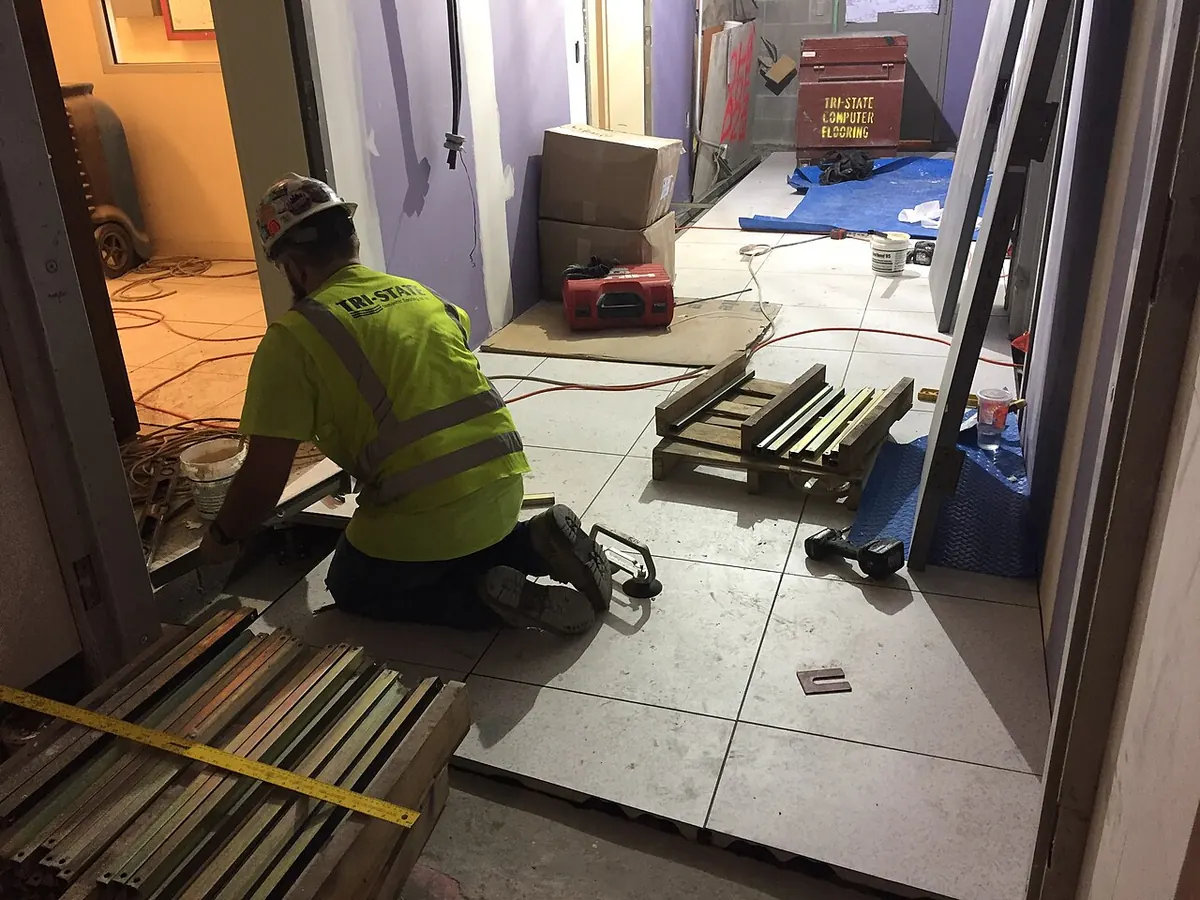
For an L-shaped room, split it into two rectangles and add them. For a niche, measure the back, the two sides and the top and bottom as flat planes, because tile goes on every one of them. A 12 in wide, 24 in tall, 4 in deep niche is about 2 sq ft of back plus roughly 2.7 sq ft of sides, top and bottom, close to 5 sq ft in total. It looks small and eats a surprising number of tiles, because every edge is a cut.
.jpg)
What to subtract (and what to leave in)
Subtract large openings only: a door, a window, a tub alcove that won't be tiled. Skip small things. Outlets, a thermostat, a soap dish and a pipe penetration all need cut tiles around them, so the tiles you'd save by subtracting them are the tiles you break while cutting.
A quick rule that works in practice: if an opening is bigger than about 10 sq ft, take it out. If it's smaller, leave it in the total and let the waste factor cover it.
Convert to tile counts, and watch the sheet trap
Divide the surface area by the area of one tile. For a 12 in by 24 in tile, that's 2 sq ft each, so 120 sq ft needs 60 tiles before waste. For 3 in by 6 in subway tile, one tile is 0.125 sq ft, so 30 sq ft of backsplash is 240 tiles.
Mosaic and subway tiles often ship on mesh sheets, and here's the trap: a "1 sq ft" sheet isn't always one square foot of coverage once you account for the gaps between sheets. Check the box for the coverage per sheet, not the nominal size, and divide your area by that number.
Waste: 10, 15 or 20 percent
Waste depends on layout and tile type, not on how careful you are.
| Situation | Typical waste |
|---|---|
| Straight lay, square room, few cuts | 10% |
| Many cuts, small or angled rooms, diagonal | 15% |
| Herringbone and other complex patterns | 15% or more |
| Handmade or artisan tile | 15 to 20% |
| Large commercial jobs with big open floors | around 5% |
Those ranges line up with what tile suppliers publish: Beltile suggests 10 percent for straight layouts and 15 percent for lots of cuts or diagonals, and Fireclay recommends 15 to 20 percent for handmade tile.
Take the 120 sq ft bathroom floor again. At 10 percent you order 132 sq ft. Set on a diagonal at 15 percent, it's 138 sq ft. With 12 in by 24 in tiles at 2 sq ft each, that's 66 tiles versus 69 tiles. Three tiles is a small difference on paper and a big one when you're one tile short on a Sunday.
The tile calculator does this conversion for you, including the waste percentage, so you can compare layouts without redoing the arithmetic.
Backsplashes: small area, high waste
A kitchen backsplash 15 ft long and 18 in tall is only 22.5 sq ft, but it has outlets, the edge of the upper cabinets, and a hood or window to cut around. Most people should order 15 percent, and more if the tile is a stone or glass that chips when cut.
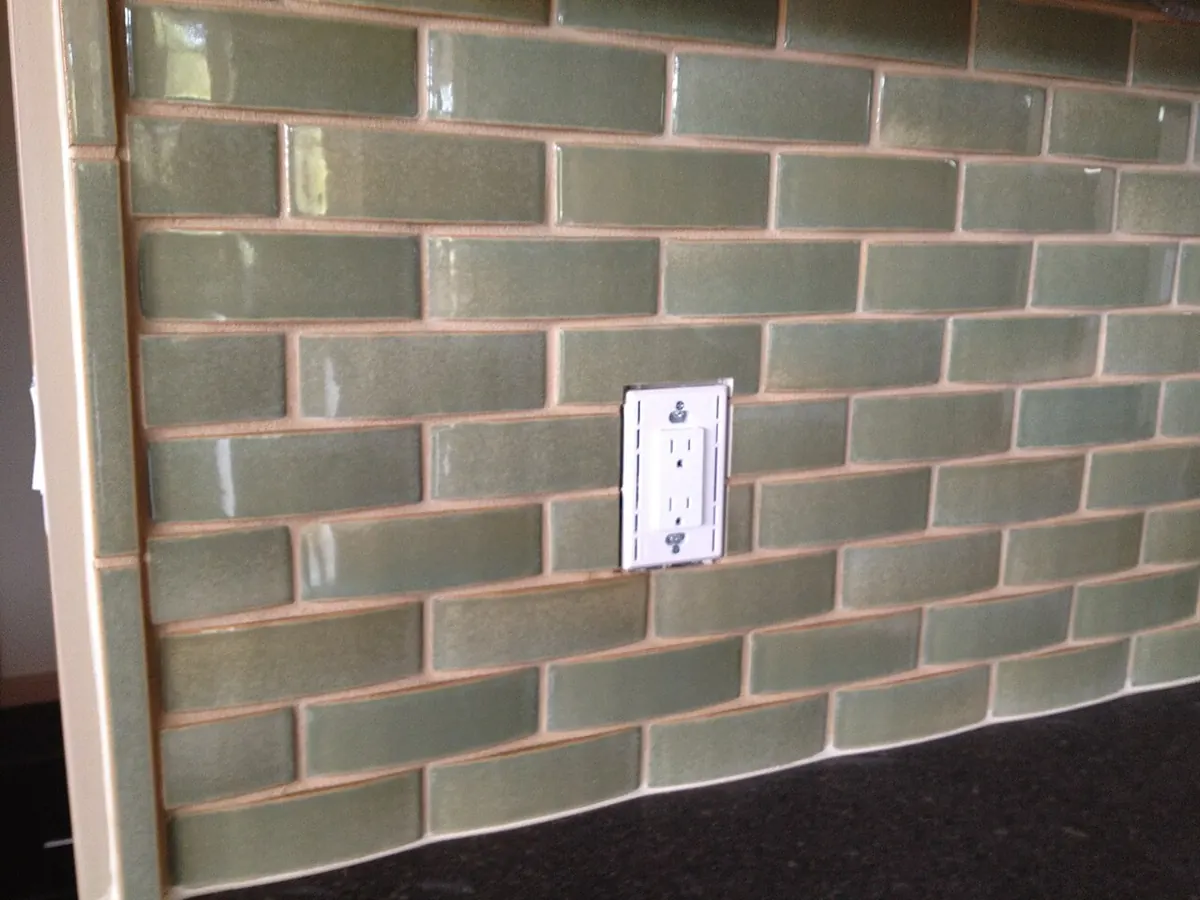

Plan the layout from the center of the main wall, or from the outlet that sits most visibly, so the cuts at both ends are the same size. That affects how many tiles you use: two half tiles at the ends can often be cut from one full tile, while a thin sliver at one end wastes a whole tile.
Walls and showers
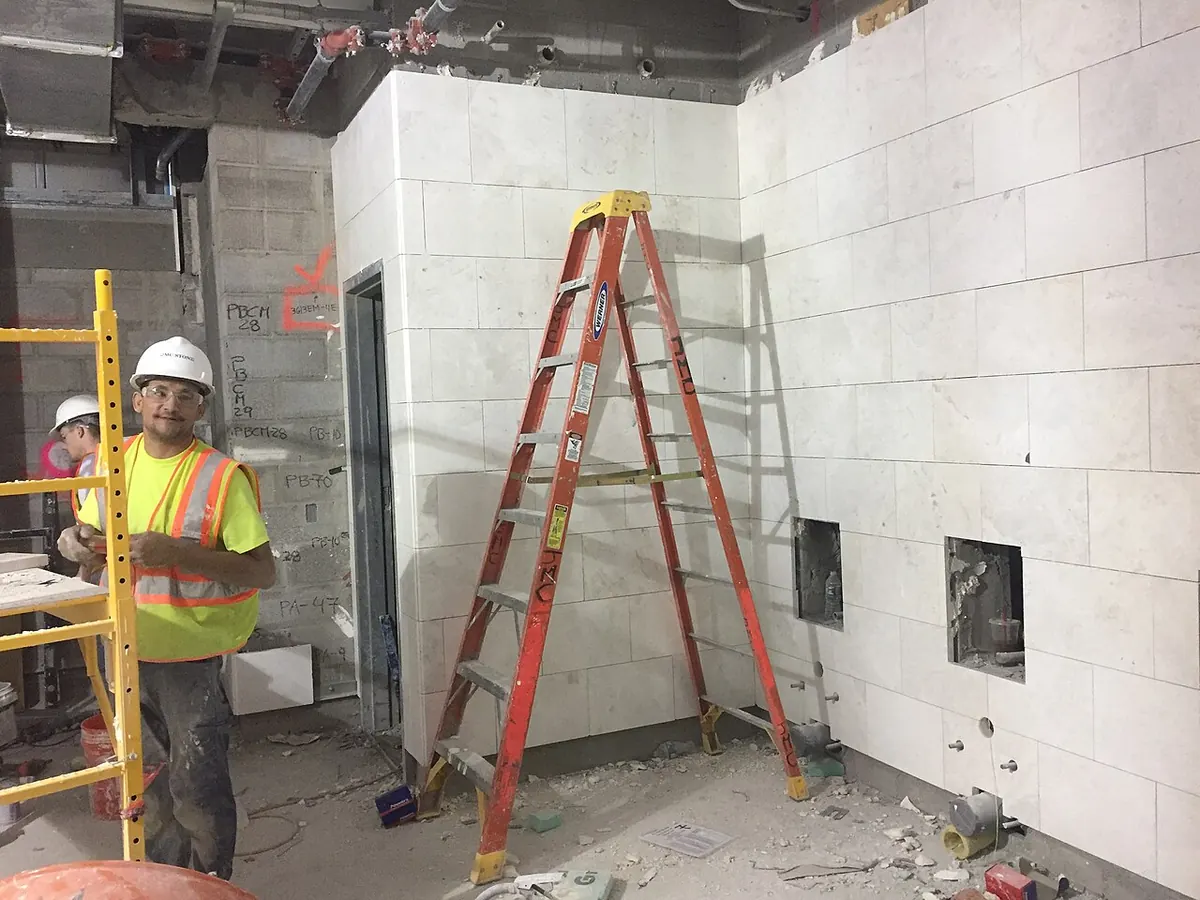
Wall tile goes up faster than floor tile but wastes more, since you cut at every inside corner, every valve and every niche. Measure height from the floor (or the top of the tub deck) to where the tile stops. Shower walls commonly go to 72 or 80 inches, but many people stop at the showerhead or run tile to the ceiling, and the difference on a 3-wall shower is easily 20 sq ft. Decide before you order.
_(44548761804).jpg)
For a shower, add 15 percent. If the shower floor is a separate mosaic pan, order it as its own line, because mosaic sheets use a different coverage figure than your wall tile.
Order spares, and order them all at once
Tile is made in batches, and each batch can vary slightly in color and size. A reorder two years later may not match. Fireclay points out that reorders can differ from your original batch, and it charges a small-batch fee on orders under 25 sq ft. Buy your waste allowance up front, and then keep any unopened boxes after the job is done. You'll want them the day a dropped pan cracks one tile.
If you're not sure between two quantities, take the larger one and return unopened boxes if the supplier allows it. Ask about the return policy before you order, because special-order tile is often final sale.
A worked example
You're retiling a 9 ft by 11 ft kitchen floor and a backsplash.
- Floor: 99 sq ft. Straight lay, so 10 percent waste gives about 109 sq ft. With 13 in by 13 in tiles at 1.17 sq ft each, that's 93 tiles.
- Backsplash: 14 ft by 1.5 ft, which is 21 sq ft. Add 15 percent for outlets and a window: about 24 sq ft. With 3 in by 6 in subway tile, that's about 192 tiles.
Round both up to full boxes, and then add one spare box of each. Then check the grout, since the joint width changes how much you need; the grout calculator uses your tile size and joint width for that.
Mistakes that cost a second order
- Measuring the room but not the niche or the tub deck.
- Subtracting every outlet.
- Ordering exactly the net area and trusting a straight layout to hold up when the first wall turns out to be out of square.
- Splitting the order across two purchases, so two dye lots end up in the same floor.
- Forgetting trim pieces, bullnose and edge profiles, which are counted in linear feet, not square feet.
Do the measuring on paper first, add the waste factor that matches your layout, and order once. If your layout changes after the tile arrives, the extra 10 percent is what keeps the project moving. To see how tile fits into the whole project cost, try the renovation budget calculator.
Sources
Estimates and rules of thumb in these guides are for planning. Always confirm product coverage, local codes and supplier figures before you buy.
Image credits
- Installer kneeling on a floor of large pale tiles with a yellow tape measure in the foreground. Photo: MTA Capital Construction Mega Projects, via Wikimedia Commons, CC BY 2.0
- Green glazed subway-style backsplash tile with a white outlet cut into the field. Photo: Capdevielle, via Wikimedia Commons, CC BY-SA 3.0
- Workers finishing a white tiled wall with cut-outs for plumbing and a ladder in front of it. Photo: MTA Capital Construction Mega Projects, via Wikimedia Commons, CC BY 2.0
Photos are resized and converted to WebP for this site; no other changes. Each remains under its original licence.
Related guides
Flooring & Tile · Guide
How Much Grout Do I Need? Joint Width, Tile Size and Bags
Grout use depends on joint width and tile size far more than floor area. Worked pound counts for mosaic, subway and large tile, plus when a 25 lb bag is too much.
Flooring & Tile · Guide
Flooring Waste Factor: Straight, Diagonal and Herringbone Layouts
How much extra flooring to buy for straight, diagonal, herringbone and chevron layouts. Waste percentages, why they differ, a worked 400 sq ft comparison, and when to add more.
Flooring & Tile · Guide
How to Measure a Room for Flooring, Including Irregular Shapes
Measure square footage for flooring accurately - rectangles, L-shaped rooms, closets, bay windows, angled walls and curves. Worked 424 sq ft example, metric conversions and common errors.