PAINTING & WALLS GUIDE
How Long Does Paint Need to Dry Between Coats?
How long between coats of paint: 2 to 4 hours for latex wall paint, overnight for oil. Recoat times by product, primer, humidity and temperature, plus dry vs cure.
How long between coats of paint? For latex (water-based) wall paint, wait 2 to 4 hours at room temperature, and for oil-based paint, wait overnight. Those are the recoat times printed on the cans, and they assume 77°F and 50 percent relative humidity, so a cold or damp room needs longer. Dry to the touch comes sooner, usually within an hour for latex, but that is not the same as ready for the next coat.
The label on your can beats any general rule, including this one. Here is how to read it, and how to adjust when your room isn't 77°F.
Dry to touch, recoat and cure are three different clocks
Every paint data sheet lists at least two times, and the gap between them is where most people go wrong.
Dry to touch means the surface no longer feels wet. Sherwin-Williams lists latex and acrylic paints at 1 to 2 hours and oil-based paint at 6 to 8 hours. Recoat is when the film underneath is firm enough to take a second coat without being dragged around by the roller. For latex that is typically 1 to 4 hours, depending on the product. Cure is when the paint reaches full hardness: Sherwin-Williams puts latex at 2 to 3 weeks and oil-based paint at roughly 5 to 15 days. Benjamin Moore and Behr both say their walls can be washed after two weeks.
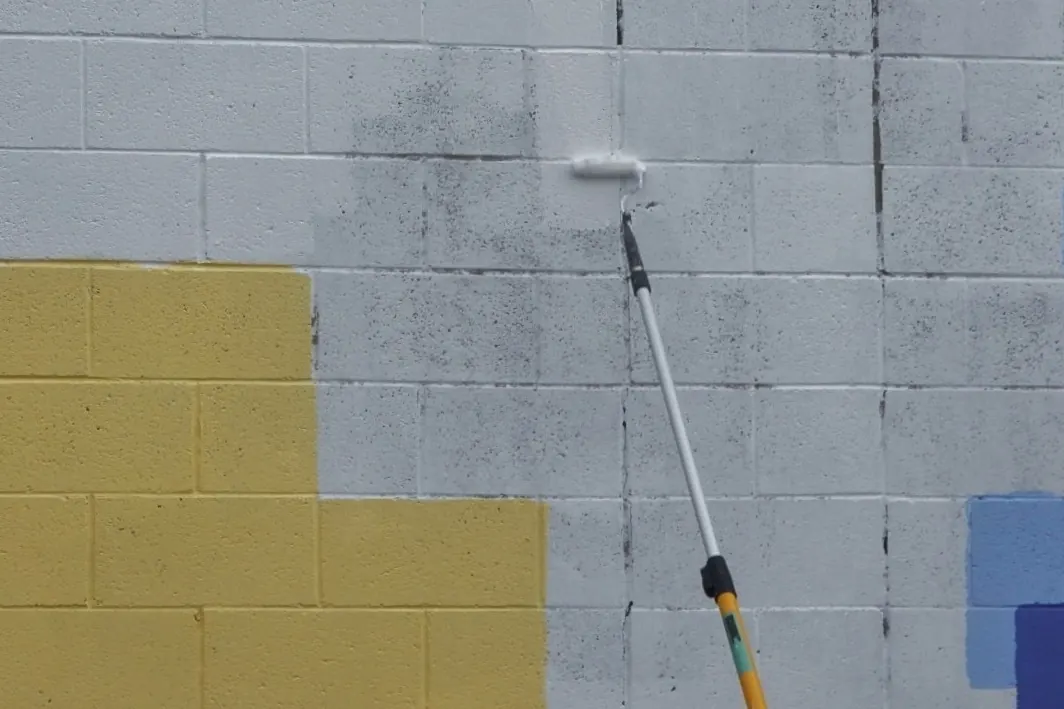
So a wall can feel dry at the one-hour mark and still be soft underneath. Roll over it then and the roller can lift or smear the first coat. That shows up as rough patches and lap marks you can see in raking light.
_(cropped).jpg)
How long between coats of paint, by product type
These figures come straight from the manufacturers' data sheets, all measured at 77°F and 50 percent humidity.
| Product | Dry to touch | Recoat | Full cure / washable |
|---|---|---|---|
| Latex wall paint (Sherwin-Williams Emerald) | 1 hour | 4 hours | 2–3 weeks |
| Latex wall paint (Benjamin Moore Regal Select eggshell) | 1 hour | 1–2 hours | wash after 2 weeks |
| Latex ceiling paint (Behr Premium Plus) | 1 hour | 2 hours | clean after 2 weeks |
| Latex primer (Benjamin Moore Fresh Start multi-purpose) | 1 hour | 3 hours | n/a |
| Latex primer-sealer (Benjamin Moore Sure Seal) | 30 minutes | 1 hour | n/a |
| Oil-based primer (Benjamin Moore Fresh Start oil) | 6–8 hours | 8 hours | n/a |
| Oil (alkyd) trim enamel (Benjamin Moore Satin Impervo) | 4 hours | overnight | about 5–15 days (oil-based, per Sherwin-Williams) |
| Waterborne alkyd enamel (Benjamin Moore Advance) | 4–6 hours | 16 hours | n/a |
Two things stand out. Recoat times vary a lot even between latex wall paints, from 1 hour to 4, so check the can rather than assuming. And the "water-based oil" enamels people use on trim and cabinets, like Advance, have recoat times closer to oil than to latex. Painters get caught by that one all the time, because it washes up with water and feels like latex in the bucket.
Primer: usually the fastest step
Latex primers are dry to the touch in 30 minutes to an hour, according to Sherwin-Williams, and oil-based primers in 1 to 3 hours. Recoat times on the primers above run from 1 hour (Sure Seal) to 8 hours (oil-based Fresh Start). If you're priming new drywall or a dark color with a latex primer, you can usually prime in the morning and start your first color coat by lunch. With an oil-based stain blocker, plan on topcoating the next day. If you're not sure whether you need primer at all, see primer and how many coats of paint.
Humidity and temperature: when to add time
All of those numbers are lab conditions. Benjamin Moore's sheets say it plainly: high humidity and cool temperatures lengthen dry, recoat and service times. None of the manufacturers publish a conversion factor, so here is how I'd handle it in practice.
Check the minimum temperature first. Sherwin-Williams Emerald should be applied above 50°F, Benjamin Moore Regal Select needs at least 50°F at the surface, and Behr Premium Plus Ceiling wants 50 to 90°F. Below that, latex may not form a proper film at all, and waiting longer doesn't fix it. At the other end, Sherwin-Williams warns that over 100°F a film can dry before it bonds properly, which can lead to peeling later.
Between those limits, treat the label's recoat time as a floor. In a 60-something-degree basement or on a muggy summer day with the windows open, I'd double it and then test before rolling.
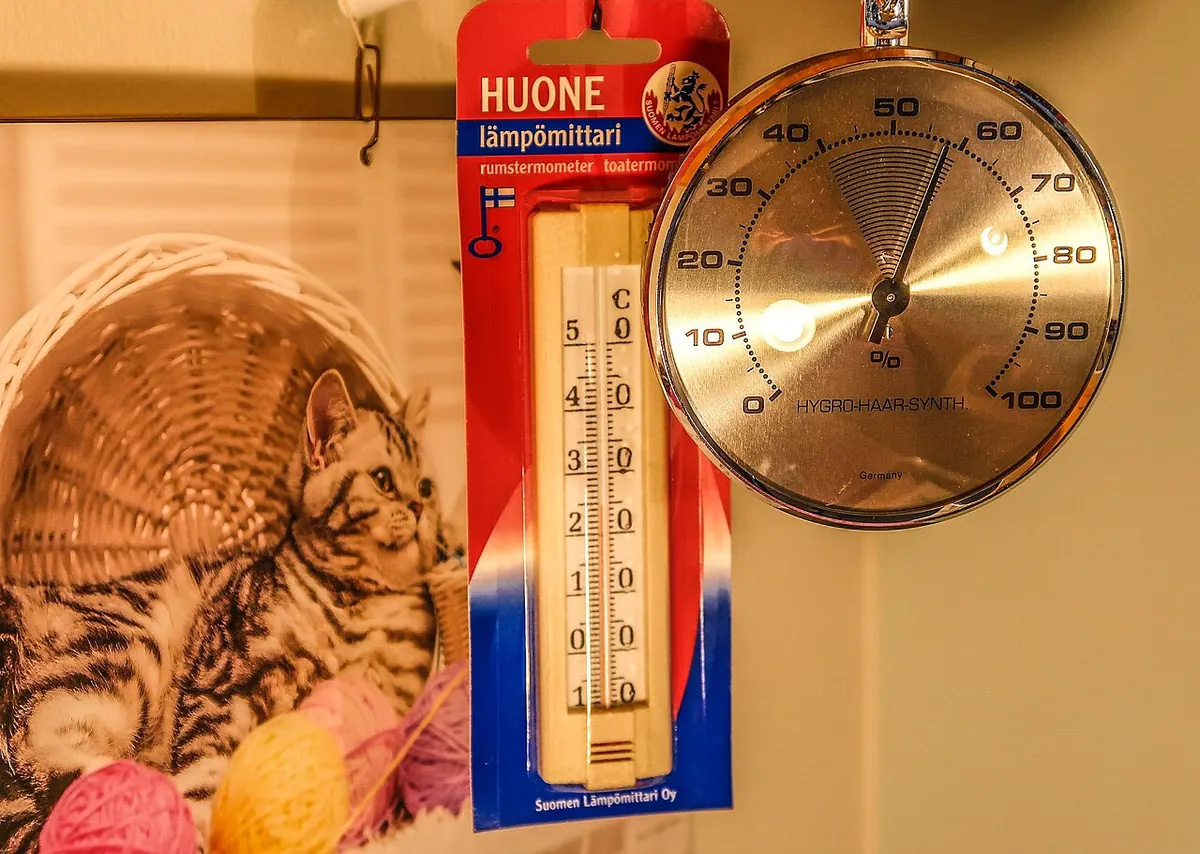

To speed things up, Sherwin-Williams recommends moving air and pulling moisture out of the room: a fan pointed indirectly at the wall from a few feet away, a dehumidifier, and keeping windows shut on humid days. It advises against using heat to speed drying, because heat can change how the color dries.
A worked example: one bedroom in a day
Say you're painting a 12 by 12 ft bedroom with a few patched nail holes, using a latex wall paint with a 4-hour recoat time, like Emerald.
- 9:00 am: spot-prime the patches with Sure Seal (1-hour recoat).
- 10:00 am: start the first coat. HomeGuide estimates 1 to 2 hours of cutting in plus 30 to 60 minutes of rolling per coat, so figure you're done around 12:30.
- 4:30 pm: the 4-hour recoat time is up. Do the thumb test on a spot behind the door, then start the second coat.
- About 7:00 pm: done. Leave the room alone for the evening.
With a 1 to 2 hour product like Regal Select, the second coat could start around 2:30 pm instead. That's the real difference between products: whether the job fits in an afternoon or runs into the evening. Use the paint calculator to work out gallons first, so you don't run out between coats. There's more on measuring in how much paint for a room.
How to tell it's ready for the next coat
Press a fingertip lightly in an out-of-the-way spot, like low in a corner or behind a door. If it feels tacky, cool or rubbery, wait. If it feels firm and room-temperature and your finger leaves no print, you're good. Check the thickest areas, like the edges where you cut in and anywhere the roller left a ridge, because those dry last.
.jpg)
Common mistakes
Recoating at dry to touch. It's the most common one. One hour on the can is not permission for the second coat.
Rolling thick to save a coat. Sherwin-Williams lists film thickness as one of the three things that set dry time, along with temperature and humidity. A heavy coat skins over on top and stays soft underneath, so it takes longer and still covers worse than two thin coats.
Painting a cold room. A garage or a basement in fall can sit below the 50°F minimum even when the thermostat upstairs says 70.
Putting things back too soon. Paint dry enough for a second coat is still weeks from cured. Pictures, furniture pushed against the wall and scrubbing all have to wait.
FAQ
Can you wait too long between coats?
Not with ordinary latex wall paint. The labels give a minimum recoat time, not a maximum. If a day or a week goes by, wipe off any dust and roll the second coat. Specialty two-part coatings are different, so read their sheets.
When can I move furniture back and hang pictures?
HomeGuide suggests 24 to 48 hours after the paint is dry to the touch. Keep furniture an inch off the wall for the first couple of weeks if you can, and don't scrub anything until it has cured (about two weeks for most latex).
Does a space heater speed up drying?
Sherwin-Williams advises against heat. Use a fan and a dehumidifier instead, and just keep the room within the paint's temperature range.
Is oil-based paint really overnight between coats?
Yes, plan on it. Sherwin-Williams says alkyd paint dries to the touch overnight, and the Benjamin Moore oil enamels and primers above list recoat times of 8 hours to overnight.
Sources
- Sherwin-Williams · How to make paint dry faster (dry and cure times by paint type)
- Sherwin-Williams · Emerald Interior Latex product data sheet
- Sherwin-Williams · Interior product application FAQs
- Benjamin Moore · Regal Select Eggshell technical data sheet
- Benjamin Moore · At-a-glance product guide (dry and recoat times)
- Behr · Premium Plus Interior Ceiling Flat Paint & Primer
- HomeGuide · How much does it cost to paint a room? (painting time FAQ)
Estimates and rules of thumb in these guides are for planning. Always confirm product coverage, local codes and supplier figures before you buy.
Image credits
- Worker rolling white paint over a yellow block wall, with the first coat still patchy and the old color showing through. Photo: Michael Coghlan, via Wikimedia Commons, CC BY-SA 2.0
- Room thermometer and round dial hygrometer hanging on a wall. Photo: Maasaak, via Wikimedia Commons, CC BY-SA 4.0
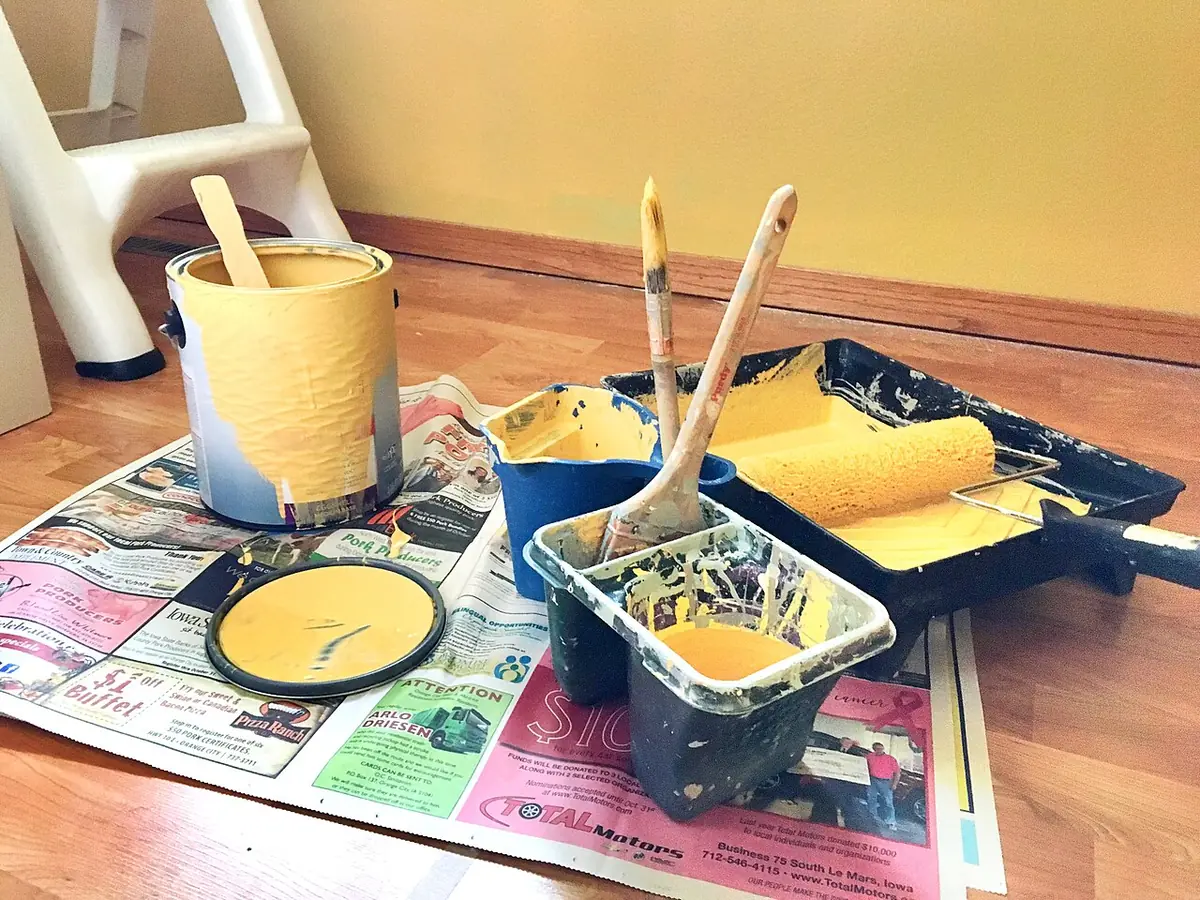
- Paint tray with a loaded yellow roller, brushes resting in cups and an open paint can on newspaper. Photo: David Mulder, via Wikimedia Commons, CC BY-SA 2.0
Photos are resized and converted to WebP for this site; no other changes. Each remains under its original licence.
Related guides
Painting & Walls · Guide
Primer and Number of Coats: How to Plan Your Paint Job
When you need primer and when you can skip it, how many coats each situation takes, primer coverage, and a worked new-drywall example with gallons for primer and paint.
Painting & Walls · Guide
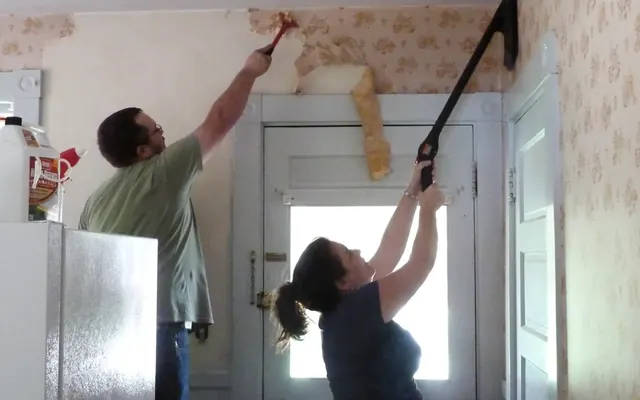
Can You Paint Over Wallpaper? When It Works and When to Strip It
Can you paint over wallpaper? Yes, if it's tight, smooth and not vinyl, and you seal it with an oil-based primer first. Here's the test, the steps, and when stripping wins.
Painting & Walls · Guide
How Much Does It Cost to Paint a Room Yourself?
The cost to paint a room yourself is about $120 to $200 for a 12x12 bedroom with mid-range paint. Itemized materials list with current prices, plus DIY vs hiring a painter.